
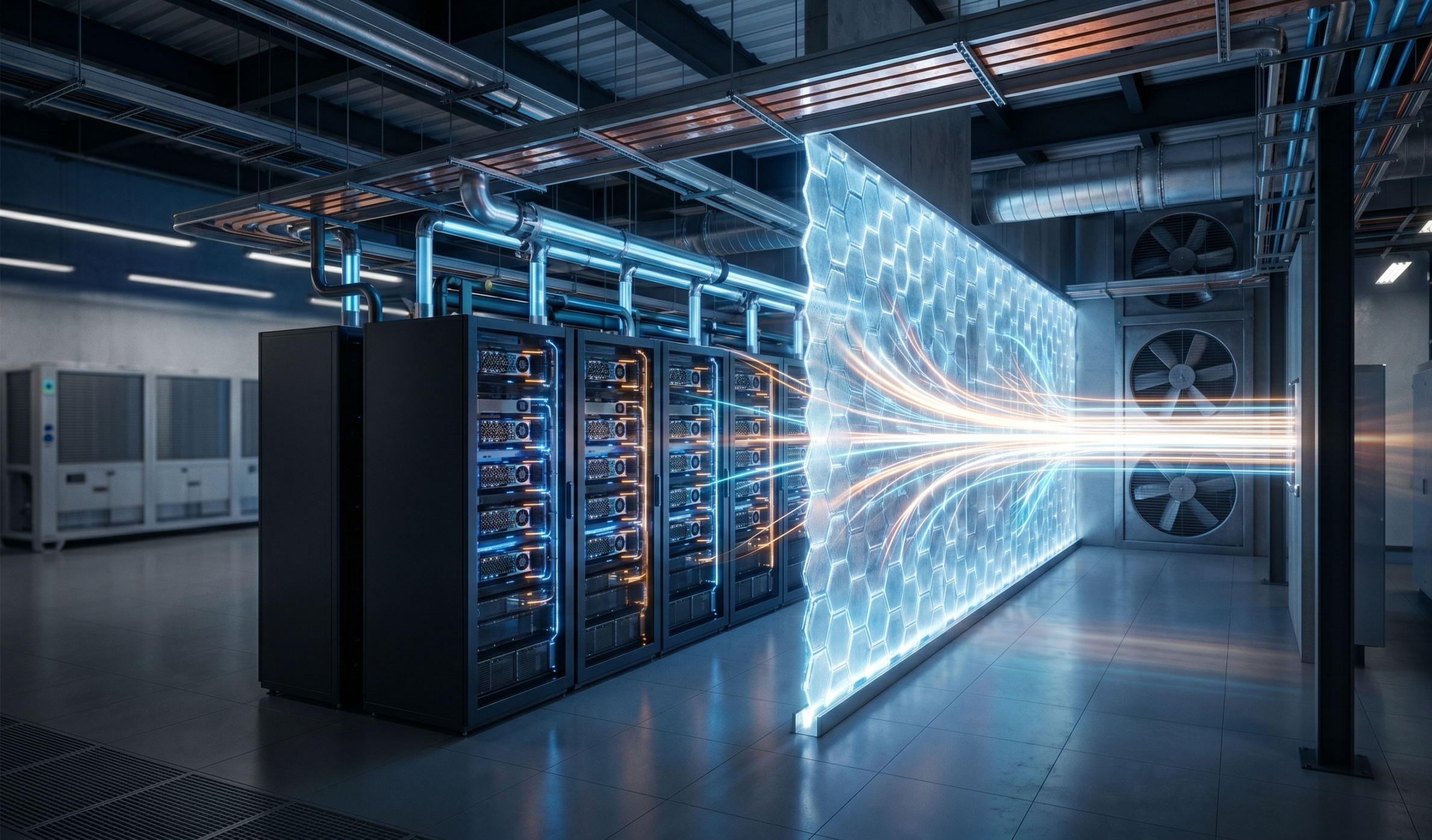
Enterprise AI adoption is accelerating quickly. But with it comes a new set of infrastructure challenges. GPU-driven workloads are pushing digital infrastructure harder than ever, especially as AI companies, hyperscalers and neocloud providers race to deploy increasingly power-hungry environments. In many cases, power availability, cooling performance and deployment timelines have become the real limiting factors, not demand for compute itself.
The industry is now running into what many operators describe as a power wall. Legacy facilities were not designed to handle highly dynamic power environments where demand can spike suddenly and fluctuate constantly. As a result, infrastructure is no longer just a facilities conversation sitting somewhere in the background of your business. It has become deeply tied to the success of your AI roadmap itself.
This shift is changing how organizations evaluate their deployments. Securing floor space alone is no longer enough. What matters now is finding a data center provider partner that can deliver you with execution certainty and confidence that your infrastructure can actually support your AI workloads reliably, efficiently and at scale.
Why It’s Time to Rethink Your Data Center Provider Partnership
Addressing the AI infrastructure bottleneck requires moving past the traditional landlord-tenant colocation relationship. Organizations scaling AI deployments need infrastructure partners that can move quickly while also designing highly customized environments built for high-density deployments. Think power densities ranging from 30 to more than 100kW per rack.
Modern AI deployments also depend heavily on advanced power and cooling strategies that are integrated directly into build-to-suit and turnkey projects. In today’s increasingly competitive landscape, many data center operators are being forced to navigate industry-wide supply chain constraints that continue to impact their deployment schedules.
This is where agile procurement models like Owner Furnished Contractor Installed (OFCI) come in. By securing long-lead equipment earlier in the process, data center providers can reduce deployment delays and bring energized capacity online much faster than traditional delivery models typically allow. And that’s what turns your AI deployment goals into reality faster, giving you a competitive edge in today’s fast-moving markets.
How To Protect Your Mission-Critical Workloads
High-density GPU colocation environments are expensive to build and extremely unforgiving operationally. Small mistakes during development, commissioning or day-to-day operations can create significant risks for customers running mission-critical AI workloads.
That’s why execution certainty matters so much. It comes from real-world operational experience, disciplined processes and the ability to actively reduce deployment risk before problems emerge.
A mature AI infrastructure strategy should account for the following four major areas of risk:
- Capital exposure
- Scheduling risks
- Commissioning performance
- Long-term operational reliability
Infrastructure partners that combine deep technical expertise with strong financial backing are often best positioned to deliver highly reliable AI-ready environments while maintaining disciplined, compliance-driven operations. Finding a data center provider with strong financials and a proven owner-operator mindset is the strong foundation you need for your high-density GPU deployments.
The Key to Securing Energized Capacity in Key Markets
Operational discipline becomes even more valuable when paired with a growing national footprint. Whether organizations are deploying in Houston, Austin, or Chicago our team at Element Critical has the resilient infrastructure and responsive customer support across major U.S. markets today’s AI companies, enterprises, hyperscalers and neoclouds need for their mission-critical workloads.
For companies targeting growth specifically in Houston, the Energy Capital, immediate access to energized capacity can provide a significant advantage. Expansions like Data Hall 5 at our Houston One data center are purpose-built to help address rising demand, while future developments such as Houston Two are intended to support long-term growth requirements as AI infrastructure needs evolve.
With plans to continue expanding through both brownfield and greenfield developments across the United States, we’re here for the long-term, ready to scale alongside customer demand. As compute requirements grow, available energized capacity must grow with them – and we’re at the forefront of this curve.
Do Not Let Infrastructure Throttle Innovation
The power wall is no longer theoretical. It is already shaping deployment timelines, operational decisions and competitive positioning across the AI landscape. Waiting for utility upgrades or relying on legacy retrofits can quickly become a disadvantage in a market moving at light speed.
Organizations increasingly need owner-operator partners capable of supporting highly variable AI power demands while also providing the hands-on operational partnership required to scale confidently.
At Element Critical, we provide that foundation through tailored, high-density infrastructure designed to support modern AI deployments. Connect with our team to explore how your infrastructure strategy can align with the operational certainty required for the next generation of AI workloads.
FAQs
How does Element Critical support high-density AI and GPU deployments?
We leverage our real-world owner and operator experience to engineer high-density data halls capable of supporting 30 to 100kW+ per rack. Our full-lifecycle expertise ensures these environments feature AI-driven power and cooling architectures tailored for advanced compute workloads.
How does an OFCI procurement strategy accelerate data center deployments?
Utilizing an Owner Furnished Contractor Installed (OFCI) strategy allows us to purchase long-lead equipment early to avoid standard supply chain delays. This dedicated approach ensures infrastructure readiness aligns precisely with your hardware deployment schedules, minimizing idle capital.
Why is an owner-operator model important for mitigating AI infrastructure risks?
An owner-operator maintains direct accountability and execution capabilities across the entire data center lifecycle, from development through daily operations. This hands-on perspective allows us to proactively mitigate risks related to capital exposure, schedule delays, commissioning performance, and long-term operational reliability.