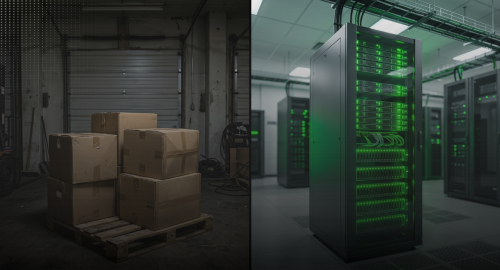
A property listing promises 50 MW of power. The location works, the land is available, and the project appears to check every box for your next AI infrastructure deployment. But before committing capital, there’s a ...
How much colocation capacity does your business actually need? Commit to too much power, and you could spend months paying for infrastructure you’re not using. Commit to too little, and your next hardware refresh, application ...
When you deploy critical infrastructure, your colocation provider should adapt to your hardware, not the other way around. Unfortunately, most enterprise IT teams are forced into rigid floor plans, generic cooling designs, and standard security ...
Infrastructure projects often get held up because traditional data center providers place organizations into deployment queues that can stretch to 90 days. Teams are left waiting on utility timelines, site preparation, and other custom requirements ...
Getting your hardware delivered on time should feel like a major win for your team. But when your servers arrive early, or your data center provider hits a wall on utility power, that hardware sits ...
Enterprise AI adoption is accelerating quickly. But with it comes a new set of infrastructure challenges. GPU-driven workloads are pushing digital infrastructure harder than ever, especially as AI companies, hyperscalers and neocloud providers race to ...
Faster answers. Better outcomes. That’s the promise behind AI in healthcare. But many organizations are running into a problem they didn’t expect. The software is ready. The infrastructure often is not. And that gap is ...
Enterprise teams often greenlight AI programs with confidence. The business case is clear. Funding is approved. Timelines feel aggressive but achievable. Then progress slows. The problem is rarely the model, the data, or internal alignment. ...
Finding the best data center in Chicago often means sorting through a long list of promises that sound the same. You want a facility that stays online, a space that can grow with you, and ...
Finding the right data center in Houston means weighing factors that don’t always align. You need reliable power, but you also need reasonable costs. Security can’t be compromised, yet you still need flexibility to grow. ...
Guaranteed Supply Chain & Engineering Collision: Based on your combined footprint, density, and aggressive timeline, attempting a DIY build is a massive liability. You are colliding directly with 100-week lead times for high-voltage transformers and extreme local permitting scrutiny for liquid-cooled environments. Relying on traditional procurement strategies could put you at risk of missing your market window and exhausting your VC runway before a single GPU is energized.
High Permitting & Procurement Risk: While your overall capacity and timeline are within the realm of possibility, your infrastructure demands trigger severe bottlenecks. Securing “commissionable power” for this density profile requires navigating complex AHJ (Authority Having Jurisdiction) approvals and bypassing standard MEP supply chain delays. A single miscalculation in utility feeder topology or equipment lead times could stall your deployment by 8 to 12 months
The Stranded Capital Risk: Your timeline and capacity targets are highly feasible, but your reliance on legacy density and cooling profiles is a long-term liability. AI hardware is not static. You risk locking your capital into a physical asset that cannot support the compute demands of tomorrow.